The 2026 midterms stock market question is on many investors’ minds. Polymarket currently shows a 92% chance Democrats take the House and a 67% chance they take the Senate.

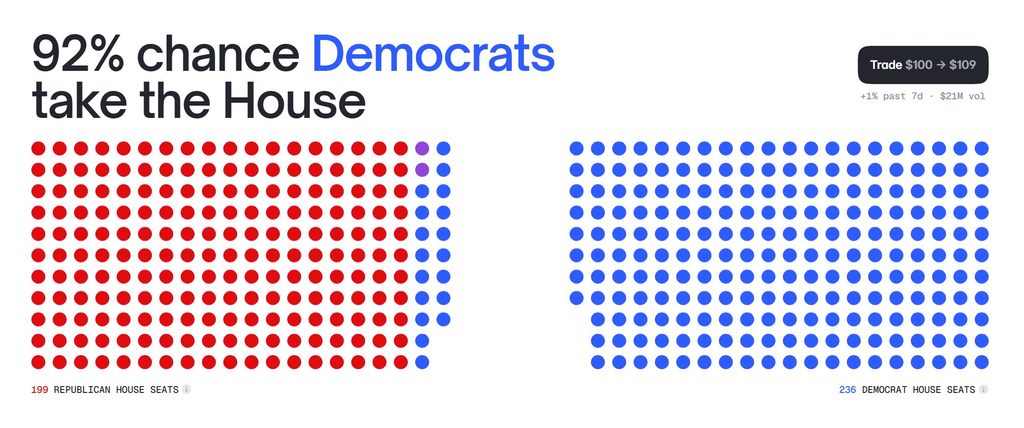
Data from Polymarket as of October 24, 2026. This is not a political opinion. It is only an look at how the likely election outcome could affect the stock market.
Here is what history suggests about the two most likely outcomes, and why the election may matter less than you think.

[Scenario 1]
Republicans hold the Senate, Democrats win the House
This is divided government. Expect fewer big new laws, more oversight, and possible fights over funding and the debt ceiling. Historically, this setup has been friendly to stocks. Divided government has averaged an 8.7% gain in the three months after a midterm election, while unified government has seen marginal losses. Markets tend to digest it well because it lowers the odds of sweeping policy changes. The risk is deadlock. Prolonged shutdown or debt ceiling disputes can add uncertainty around spending and the fiscal outlook.

[Scenario 2]
Democrats win both chambers
This is the outcome the odds favor. It is still not full Democratic control, because the president can veto bills. A sweep would still mean divided government overall. The practical difference is Senate power over confirmations and stronger oversight. Areas that could see more headline volatility include tariffs, tax policy, Big Tech, energy and pharma. There is no clean historical precedent for this exact setup, so treat any forecast with caution.

Why the result may matter less than the timing
Midterm years tend to have the weakest average returns, but every midterm year since 1946 was followed by positive one year returns as uncertainty faded. In other words, the relief after the vote has often mattered more than who won. Also, with odds this lopsided, a Democratic win is largely priced in. The bigger market reaction would come from a surprise, such as Republicans holding the Senate.
Finally, politics is rarely the main driver. Affordability, energy prices, mortgage rates and AI are described as bigger forces for markets. Earnings and Fed policy will likely outweigh any election effect.
Polymarket odds change every day, and the actual election results could turn out differently. My analysis focuses on how the election could affect the stock market, not on politics. This post is for educational purposes only and is not financial advice.
Source: Polymarket
Leave a Reply