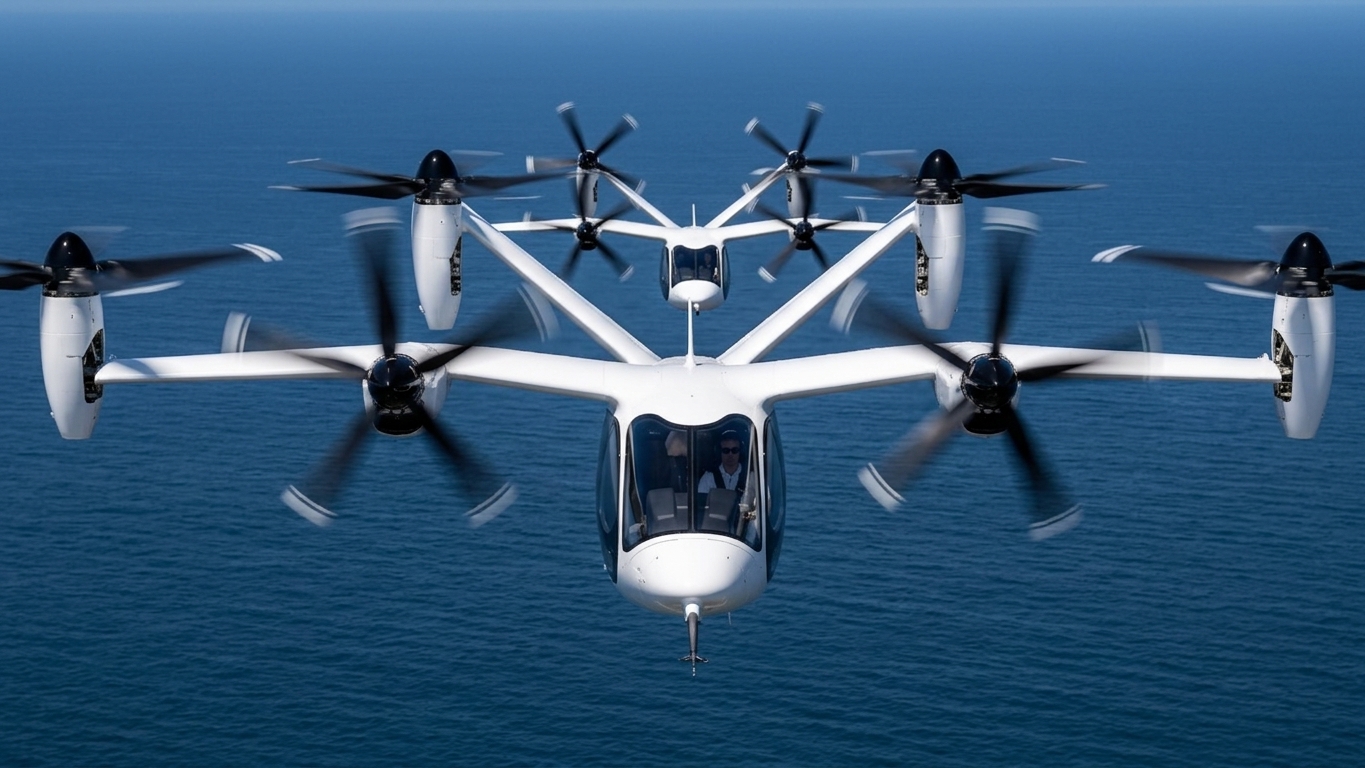
Joby Aviation, Inc. (NYSE: JOBY)
What Joby Aviation Actually Does
Joby is building a commercial air taxi service. Instead of selling aircraft directly to consumers, Joby operates a vertically integrated business model: they design, manufacture, and intend to operate their own 4-passenger electric air taxis. Think of them as an electric airline and ride-hailing network rolled into one. Additionally, they generate revenue through defense contracts (U.S. Department of Defense) and traditional passenger operations.
The Big Pivots & Moats: Short-Term vs. Long-Term
Joby’s transition from an R&D lab to an operational business relies on two major strategic pivots:
- Short-Term Pivot (Blade Acquisition): Joby acquired Blade Urban Air Mobility’s passenger business. Instead of waiting years for eVTOL certification to make a dime, Joby immediately secured an operational passenger logistics network. Blade generated $36.2 million in Q2 2026 alone with seat volume up over 50% year-over-year.
- Long-Term Pivot (Toyota Automotive Scaling Alliance): Building 5 boutique aircraft is easy; building 500 a year is brutally difficult. Joby pivoted from standalone aerospace manufacturing to a strategic alliance with Toyota Motor Corporation. Toyota has assigned senior manufacturing leaders on-site and committed over $250 million in direct capital to help Joby build automotive-grade, high-volume assembly lines.
Joby’s Economic Moats:
- Manufacturing Moat: Backed by Toyota’s production mastery and tooling.
- First-Mover Regulatory Lead: Deep into the 5th and final stage of FAA Type Certification with active FAA-conforming test flights.
- Infrastructure & Commercial Ecosystem: Pre-established vertiport routes and operating platforms via Blade, plus partnerships with Delta Air Lines, United, and Virgin Atlantic.
Technology Roadmap: Are They on Track?
Joby is strictly following its multi-year execution timeline, moving from flight testing into regulatory verification.
- Short-Term Progress: Joby is flying first FAA-conforming aircraft for official “for credit” certification testing. They currently have 5 aircraft flying and 12 more in production. Under the White House-backed eIPP program in Texas, they expect initial passenger demonstration flights in 2026.
- Long-Term Tech: Joby is testing hydrogen/turbine-electric hybrid demonstrators for extended regional trips and developing Superpilot™, an autonomous flight system that logged over 7,000 miles in U.S. defense exercises.
- The Goal: A zero-operating-emission, ultra-quiet eVTOL network operating at scale across major metropolitan hubs.
Financial Deep Dive: Revenue, Burn, and Runway
Joby’s financial picture is defined by rapid top-line growth paired with heavy ongoing R&D investments.
| Metric | Recent Financial Result | Note / Trend |
| Q2 2026 Revenue | $38.64 Million | Beat estimates ($30.2M) by 28% |
| QoQ Revenue Growth | +59.3% | Up from $24.25M in Q1 2026 |
| YoY Revenue Growth | +257,000%+ | Driven by Blade integration vs nominal 2025 revenue |
| GAAP EPS | -$0.25 | Vs -$0.12 in Q1 2026 |
| Adjusted EBITDA Loss | -$197.0 Million | Widened from -$131.6M in Q2 2025 as R&D scaled |
| Cash & Short-Term Assets | $2.264 Billion | Massive liquidity buffer |
| Quarterly Cash Use / Burn | ~$190M – $205M / Qtr | H2 2026 cash use guided at $385M–$415M |
Cash Runway & Path to Profitability:
With $2.264 billion in cash and short-term investments and an average cash use of ~$200 million per quarter, Joby’s existing capital will comfortably last roughly 10 to 11 quarters (approx. 2.5 to 3 years). They do not face immediate dilution pressure. Commercial scale and net profitability are not anticipated until 2028–2029, as passenger routes scale globally.
Corporate Guidance & Institutional Sentiment
- Short-Term Guidance: Management raised full-year 2026 revenue guidance to $115M – $125M (up from $105M–$115M).
- Long-Term Guidance: Launching commercial air taxi operations in the UAE (Dubai/Abu Dhabi) and selected U.S. urban corridors.
- Institutional Investment: Institutional ownership sits at ~52.85%. Over the past three years, institutional shareholdings have increased by over 27%, with total institutional investor count climbing 44% YoY, signaling strong smart-money backing.
The Verdict: Is Joby Worth Investing In?
Joby is the clear front-runner in the eVTOL race. With $2.3 billion in cash, Toyota’s operational muscle, active FAA-conforming test flights, and real revenue coming in from Blade, Joby has de-risked its path far more than competitors. While widening losses mean it is a long-term growth play, it remains one of the strongest speculative tech investments in aerospace.
Disclosure: The author holds a long position in $JOBY stock at the time of writing
Leave a Reply